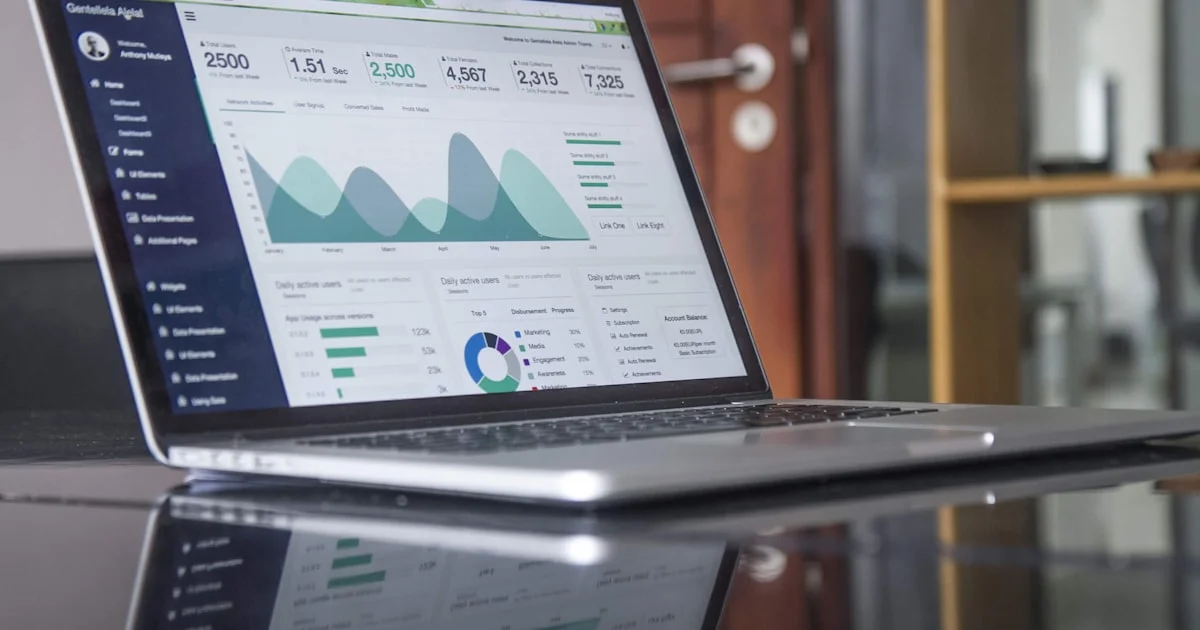
2026 ist das Jahr, in dem Data Mesh vom Buzzword zur Realität wird. Unternehmen verabschieden sich von monolithischen Data Warehouses und setzen auf dezentrale Datenprodukte, Real-Time Event Streaming und KI-gestützte Analytics. Die Transformation hat begonnen.
Die Data Mesh Revolution: Warum zentrale Architekturen scheitern
Jahrelang versuchten Unternehmen, alle Daten in einem zentralen Data Warehouse zu konsolidieren. Das Ergebnis: überlastete Datenteams, monatelange Wartezeiten für neue Reports und Datensilos, die niemand mehr durchblickt.
Data Mesh kehrt diese Architektur um. Statt Zentralisierung setzt es auf vier fundamentale Prinzipien:
- Domain Ownership: Jeder Fachbereich ist für seine Daten verantwortlich
- Data as a Product: Daten werden wie Produkte behandelt – mit SLAs, Dokumentation und Qualitätsgarantien
- Self-Serve Platform: Eine zentrale Plattform ermöglicht dezentrale Autonomie
- Federated Governance: Globale Standards, lokale Umsetzung
«Data Mesh ist nicht nur eine technische Architektur – es ist ein organisatorisches Paradigma, das die Art verändert, wie wir über Datenverantwortung denken.»
— Zhamak Dehghani, Erfinderin von Data Mesh
Event Streaming mit Apache Kafka: Das Nervensystem moderner Datenarchitekturen
Apache Kafka hat sich 2026 als unverzichtbares Rückgrat für Real-Time Analytics etabliert. Mit Kafka 4.0 und der vollständigen Ablösung von ZooKeeper durch KRaft ist die Plattform reifer denn je.
Die Kafka-Architektur 2026
# kafka-cluster-config.yaml
apiVersion: kafka.strimzi.io/v1beta2
kind: Kafka
metadata:
  name: enterprise-data-mesh
spec:
  kafka:
    version: 4.0.0
    replicas: 5
    listeners:
      - name: internal
        port: 9092
        type: internal
        tls: true
      - name: external
        port: 9094
        type: loadbalancer
        tls: true
    config:
      auto.create.topics.enable: false
      compression.type: zstd
      num.partitions: 12
      default.replication.factor: 3
      min.insync.replicas: 2
    storage:
      type: persistent-claim
      size: 2Ti
      class: premium-ssd
  kafkaExporter:
    groupRegex: ".*"
    topicRegex: ".*"
Event-Driven Microservices Pattern
Der klassische Request-Response-Ansatz weicht dem Event-Driven-Pattern:
// order-service/src/events/order-placed.ts
import { Kafka, Partitioners } from 'kafkajs'

const kafka = new Kafka({
  clientId: 'order-service',
  brokers: process.env.KAFKA_BROKERS.split(','),
  ssl: true,
  sasl: {
    mechanism: 'scram-sha-512',
    username: process.env.KAFKA_USER,
    password: process.env.KAFKA_PASSWORD,
  },
})

const producer = kafka.producer({
  createPartitioner: Partitioners.DefaultPartitioner,
  idempotent: true,
  transactionalId: 'order-transactions',
})

interface OrderPlacedEvent {
  eventId: string
  eventType: 'ORDER_PLACED'
  timestamp: string
  payload: {
    orderId: string
    customerId: string
    items: Array<{ productId: string; quantity: number; price: number }>
    totalAmount: number
    currency: string
  }
  metadata: {
    correlationId: string
    source: string
    version: string
  }
}

export async function publishOrderPlaced(order: Order): Promise<void> {
  const event: OrderPlacedEvent = {
    eventId: crypto.randomUUID(),
    eventType: 'ORDER_PLACED',
    timestamp: new Date().toISOString(),
    payload: {
      orderId: order.id,
      customerId: order.customerId,
      items: order.items,
      totalAmount: order.total,
      currency: 'CHF',
    },
    metadata: {
      correlationId: order.correlationId,
      source: 'order-service',
      version: '2.0.0',
    },
  }

  await producer.send({
    topic: 'commerce.orders.placed',
    messages: [
      {
        key: order.customerId,
        value: JSON.stringify(event),
        headers: {
          'event-type': 'ORDER_PLACED',
          'content-type': 'application/json',
        },
      },
    ],
  })
}
Dezentrale Datenprodukte: Das Herzstück von Data Mesh
Ein Datenprodukt ist mehr als nur eine Tabelle oder ein Dataset. Es ist ein eigenständiges, autonomes Artefakt mit klaren Schnittstellen:
| Komponente | Beschreibung | Beispiel |
|---|---|---|
| Input Ports | Datenquellen und Events | Kafka Topics, APIs, Datenbanken |
| Transformation | Business Logic | dbt Models, Spark Jobs |
| Output Ports | Konsumierbare Schnittstellen | REST APIs, SQL Views, Parquet Files |
| Data Contract | Schema und SLAs | JSON Schema, OpenAPI, Data Quality Rules |
| Observability | Monitoring und Lineage | Metrics, Logs, Data Lineage Graph |
Data Contract Beispiel
# data-products/customer-360/contract.yaml
dataProduct:
  name: customer-360
  domain: marketing
  owner: marketing-data-team
  version: 3.2.0
  description: |
    Unified customer view combining CRM, transactions,
    and behavioral data for personalization use cases.

schema:
  type: object
  properties:
    customerId:
      type: string
      format: uuid
      description: Unique customer identifier
    segment:
      type: string
      enum: [premium, standard, new, churning]
    lifetimeValue:
      type: number
      minimum: 0
      description: Predicted customer lifetime value in CHF
    lastActivity:
      type: string
      format: date-time
    preferences:
      type: object
      properties:
        language: { type: string }
        channels: { type: array, items: { type: string } }

sla:
  freshness: PT15M  # Max 15 minutes delay
  availability: 99.9%
  qualityScore: 0.95

access:
  classification: internal
  requiredPermissions:
    - marketing:read
    - analytics:read
Snowflake & dbt: Der Modern Data Stack 2026
Die Kombination aus Snowflake als Cloud Data Platform und dbt als Transformation Layer dominiert 2026 den Enterprise-Markt. Neu hinzu kommt die native Integration von KI-Features.
dbt mit Snowflake Cortex
-- models/marts/customer_insights.sql
{{ config(
    materialized='incremental',
    unique_key='customer_id',
    cluster_by=['segment', 'region'],
    tags=['customer', 'ml']
) }}

WITH customer_base AS (
    SELECT
        customer_id,
        email,
        created_at,
        total_orders,
        total_revenue,
        last_order_date
    FROM {{ ref('stg_customers') }}
),

-- Snowflake Cortex AI: Sentiment Analysis
support_sentiment AS (
    SELECT
        customer_id,
        AVG(
            SNOWFLAKE.CORTEX.SENTIMENT(ticket_text)
        ) AS avg_sentiment_score
    FROM {{ ref('stg_support_tickets') }}
    WHERE created_at >= DATEADD(month, -3, CURRENT_DATE)
    GROUP BY customer_id
),

-- Snowflake Cortex AI: Churn Prediction
churn_prediction AS (
    SELECT
        customer_id,
        SNOWFLAKE.CORTEX.COMPLETE(
            'claude-3-opus',
            CONCAT(
                'Based on this customer data, predict churn risk (low/medium/high): ',
                TO_VARCHAR(customer_data)
            )
        ) AS churn_risk
    FROM customer_features
),

-- Segmentation mit Clustering
segmentation AS (
    SELECT
        customer_id,
        CASE
            WHEN total_revenue > 10000 AND order_frequency > 12 THEN 'premium'
            WHEN days_since_last_order > 180 THEN 'churning'
            WHEN created_at > DATEADD(month, -6, CURRENT_DATE) THEN 'new'
            ELSE 'standard'
        END AS segment
    FROM customer_metrics
)

SELECT
    c.customer_id,
    c.email,
    s.segment,
    c.total_revenue AS lifetime_value,
    c.total_orders,
    COALESCE(ss.avg_sentiment_score, 0) AS support_sentiment,
    cp.churn_risk,
    CURRENT_TIMESTAMP AS updated_at
FROM customer_base c
LEFT JOIN segmentation s ON c.customer_id = s.customer_id
LEFT JOIN support_sentiment ss ON c.customer_id = ss.customer_id
LEFT JOIN churn_prediction cp ON c.customer_id = cp.customer_id

{% if is_incremental() %}
WHERE c.updated_at > (SELECT MAX(updated_at) FROM {{ this }})
{% endif %}
dbt Tests und Data Quality
# models/marts/schema.yml
version: 2

models:
  - name: customer_insights
    description: "Customer 360 view with AI-powered insights"
    config:
      contract:
        enforced: true
    columns:
      - name: customer_id
        data_type: varchar
        constraints:
          - type: not_null
          - type: primary_key
        tests:
          - unique
          - not_null

      - name: segment
        data_type: varchar
        tests:
          - accepted_values:
              values: ['premium', 'standard', 'new', 'churning']

      - name: lifetime_value
        data_type: number
        tests:
          - not_null
          - dbt_utils.accepted_range:
              min_value: 0
              inclusive: true

    tests:
      - dbt_utils.recency:
          datepart: hour
          field: updated_at
          interval: 1
Apache Spark 4.0: Streaming und Batch vereint
Mit Spark 4.0 verschwindet die Grenze zwischen Batch- und Stream-Processing endgültig. Spark Connect ermöglicht zudem eine vollständige Entkopplung von Client und Server.
# analytics/realtime_aggregations.py
from pyspark.sql import SparkSession
from pyspark.sql.functions import (
    window, col, sum, count, avg,
    from_json, to_json, current_timestamp
)
from pyspark.sql.types import StructType, StructField, StringType, DoubleType

# Spark Connect: Remote Session
spark = SparkSession.builder     .remote("sc://spark-cluster.internal:15002")     .appName("RealTimeAnalytics")     .config("spark.sql.streaming.stateStore.providerClass",
            "org.apache.spark.sql.execution.streaming.state.RocksDBStateStoreProvider")     .getOrCreate()

# Schema für eingehende Events
order_schema = StructType([
    StructField("orderId", StringType()),
    StructField("customerId", StringType()),
    StructField("amount", DoubleType()),
    StructField("currency", StringType()),
    StructField("timestamp", StringType()),
    StructField("region", StringType()),
])

# Kafka Source - Real-Time Stream
orders_stream = spark     .readStream     .format("kafka")     .option("kafka.bootstrap.servers", "kafka.internal:9092")     .option("subscribe", "commerce.orders.placed")     .option("startingOffsets", "latest")     .option("kafka.security.protocol", "SASL_SSL")     .load()     .select(from_json(col("value").cast("string"), order_schema).alias("order"))     .select("order.*")

# Windowed Aggregations
revenue_per_region = orders_stream     .withWatermark("timestamp", "10 minutes")     .groupBy(
        window(col("timestamp"), "5 minutes", "1 minute"),
        col("region")
    )     .agg(
        sum("amount").alias("total_revenue"),
        count("orderId").alias("order_count"),
        avg("amount").alias("avg_order_value")
    )

# Output zu Delta Lake und Kafka
query = revenue_per_region     .writeStream     .format("delta")     .outputMode("update")     .option("checkpointLocation", "/data/checkpoints/revenue")     .partitionBy("region")     .toTable("analytics.realtime_revenue")

# Parallel: Alerts zu Kafka
alerts_query = revenue_per_region     .filter(col("order_count") > 1000)     .select(to_json(struct("*")).alias("value"))     .writeStream     .format("kafka")     .option("kafka.bootstrap.servers", "kafka.internal:9092")     .option("topic", "analytics.alerts.high-volume")     .option("checkpointLocation", "/data/checkpoints/alerts")     .start()

query.awaitTermination()
KI-gestützte Insights: Von Daten zu Entscheidungen
2026 ist Analytics ohne KI kaum noch vorstellbar. Die Integration von Large Language Models in Analytics-Workflows ermöglicht völlig neue Use Cases:
- Natural Language Queries: «Zeige mir die Top-Kunden in Zürich mit sinkenden Umsätzen»
- Automated Insights: KI erkennt Anomalien und generiert Erklärungen
- Predictive Analytics: Churn Prediction, Demand Forecasting, Fraud Detection
- Data Quality Automation: Automatische Erkennung und Korrektur von Datenfehlern
Text-to-SQL mit Claude
// analytics-api/src/natural-language-query.ts
import Anthropic from '@anthropic-ai/sdk'
import { db } from './database'

const anthropic = new Anthropic()

interface QueryResult {
  sql: string
  explanation: string
  data: Record<string, unknown>[]
  visualization: 'table' | 'bar' | 'line' | 'pie'
}

export async function executeNaturalLanguageQuery(
  question: string,
  context: { tables: string[]; userRole: string }
): Promise<QueryResult> {

  // Schema-Informationen laden
  const schemaInfo = await getSchemaForTables(context.tables)

  const response = await anthropic.messages.create({
    model: 'claude-sonnet-4-20250514',
    max_tokens: 2000,
    system: `Du bist ein SQL-Experte für Snowflake.
Generiere ausschliesslich sichere SELECT-Statements.
Verfügbare Tabellen und Schemas:
\${schemaInfo}

Antworte immer im JSON-Format:
{
  "sql": "SELECT ...",
  "explanation": "Diese Query...",
  "visualization": "table|bar|line|pie"
}`,
    messages: [
      {
        role: 'user',
        content: question,
      },
    ],
  })

  const result = JSON.parse(response.content[0].text)

  // SQL-Injection Prevention
  if (!isSafeQuery(result.sql)) {
    throw new Error('Unsafe query detected')
  }

  // Query ausführen
  const data = await db.execute(result.sql)

  return {
    sql: result.sql,
    explanation: result.explanation,
    data,
    visualization: result.visualization,
  }
}
BI-Dashboards & Visualization: Die letzte Meile
Die beste Datenarchitektur nützt nichts, wenn die Insights nicht bei den Entscheidungsträgern ankommen. 2026 setzen führende Tools auf Embedded Analytics und Self-Service BI.
Tool-Vergleich 2026
| Tool | Stärken | Ideal für | Preis (CHF/User/Monat) |
|---|---|---|---|
| Tableau | Visualisierung, Enterprise-Features | Grosse Teams, komplexe Dashboards | 70-150 |
| Looker | Semantic Layer, Git-Integration | Data Teams, Embedding | 60-120 |
| Metabase | Open Source, Self-Service | Startups, Self-Hosting | 0-85 |
| Superset | Open Source, SQL-First | Technische Teams | 0 (Self-Hosted) |
| Sigma | Spreadsheet-UI, Cloud-Native | Business Users | 50-100 |
Embedded Analytics Beispiel
// components/EmbeddedDashboard.tsx
'use client'

import { useEffect, useState } from 'react'
import { LookerEmbedSDK } from '@looker/embed-sdk'

interface DashboardProps {
  dashboardId: string
  filters?: Record<string, string>
}

export function EmbeddedDashboard({ dashboardId, filters }: DashboardProps) {
  const [dashboard, setDashboard] = useState<LookerDashboard | null>(null)

  useEffect(() => {
    LookerEmbedSDK.init('https://analytics.mazdek.ch', {
      auth_url: '/api/looker/auth',
    })

    LookerEmbedSDK.createDashboardWithId(dashboardId)
      .withFilters(filters || {})
      .withTheme('mazdek_dark')
      .appendTo('#dashboard-container')
      .build()
      .connect()
      .then(setDashboard)
  }, [dashboardId, filters])

  const handleExport = async () => {
    if (dashboard) {
      await dashboard.downloadPdf()
    }
  }

  return (
    <div className="dashboard-wrapper">
      <div className="dashboard-toolbar">
        <button onClick={handleExport}>PDF Export</button>
        <button onClick={() => dashboard?.refresh()}>Aktualisieren</button>
      </div>
      <div id="dashboard-container" className="h-[600px]" />
    </div>
  )
}
Implementierungs-Roadmap: Von 0 auf Data Mesh
Eine Data Mesh Transformation passiert nicht über Nacht. Hier ist ein realistischer Fahrplan:
Phase 1: Foundation (3-6 Monate)
- Self-Serve Data Platform aufbauen (Snowflake, dbt Cloud)
- Kafka Cluster für Event Streaming einrichten
- Data Governance Framework definieren
- Erstes Pilot-Datenprodukt mit einem Domain-Team
Phase 2: Scale (6-12 Monate)
- 3-5 weitere Datenprodukte onboarden
- Data Contracts als Standard etablieren
- BI-Tool-Strategie umsetzen
- Data Quality Monitoring implementieren
Phase 3: Optimize (12-18 Monate)
- KI-gestützte Analytics Features
- Real-Time Use Cases ausbauen
- Federated Governance verfeinern
- Cost Optimization und FinOps
Fazit: Daten als strategischer Wettbewerbsvorteil
Data Mesh, Real-Time Analytics und KI-gestützte Insights sind 2026 keine optionalen Nice-to-haves mehr – sie sind geschäftskritische Capabilities. Unternehmen, die jetzt investieren, sichern sich entscheidende Wettbewerbsvorteile:
- Schnellere Entscheidungen: Von Tagen auf Sekunden
- Bessere Datenqualität: Durch dezentrale Verantwortung
- Skalierbare Architektur: Wachstum ohne Engpässe
- KI-Readiness: Solide Datenbasis für ML und GenAI
Bei mazdek begleiten wir Unternehmen auf dem Weg zur datengetriebenen Organisation – von der Strategie über die Architektur bis zur Implementierung.